
 By Plumber in Auburn Hills, MI, plumbers on Pond Run in Auburn HillsPublished October 28, 2026Last updated October 28, 2026
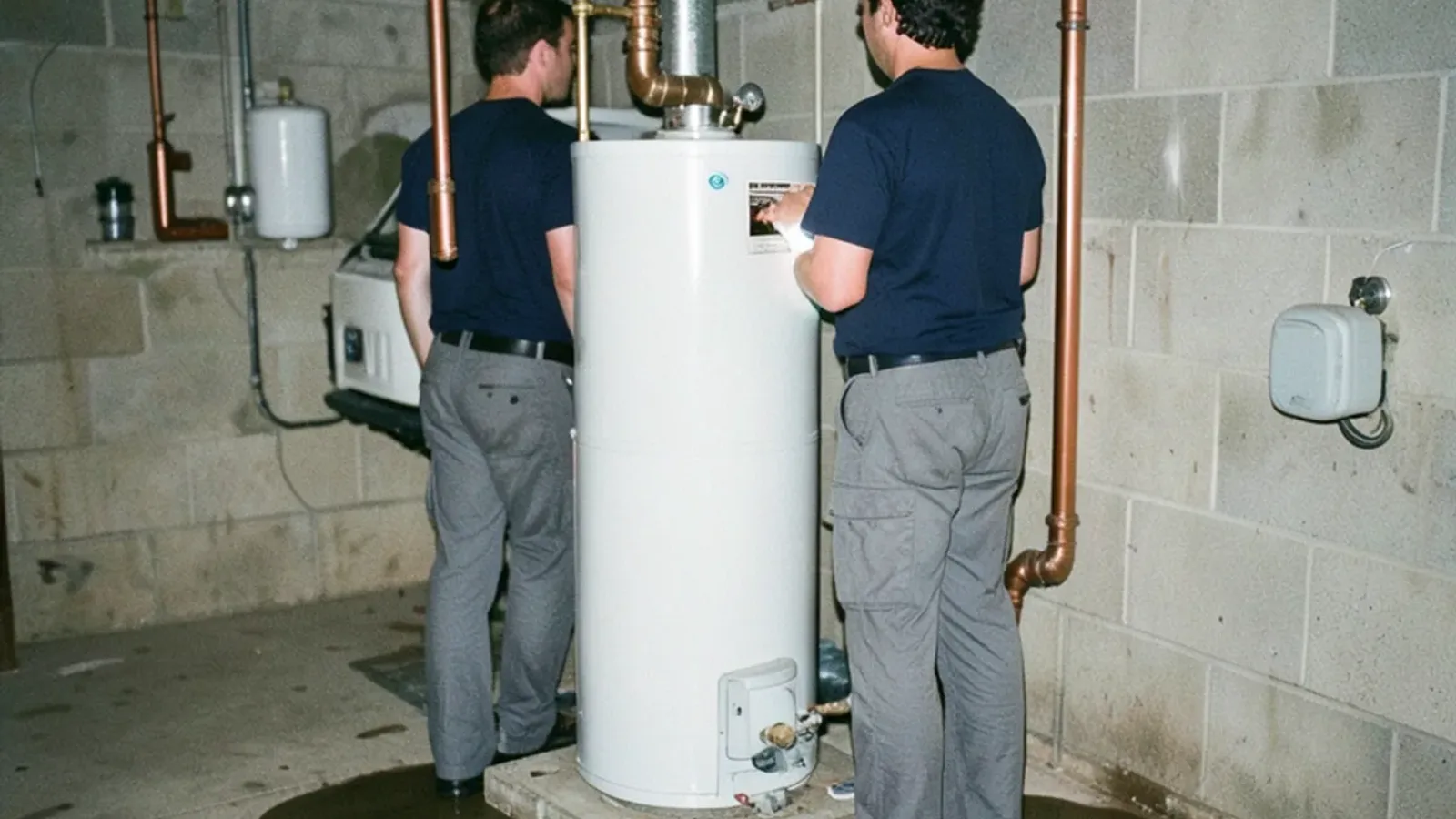
If you have found water around your water heater, the first fifteen minutes matter more than the diagnosis. Shut the water supply to the heater, cut its power or gas, and figure out whether you are looking at a dripping valve or a tank that has rusted through, because one is a repair and the other means replacement.
This walks through those first steps in order, how to read where the water is actually coming from, and when the leak is past a fix.
Shut off the water and the power first
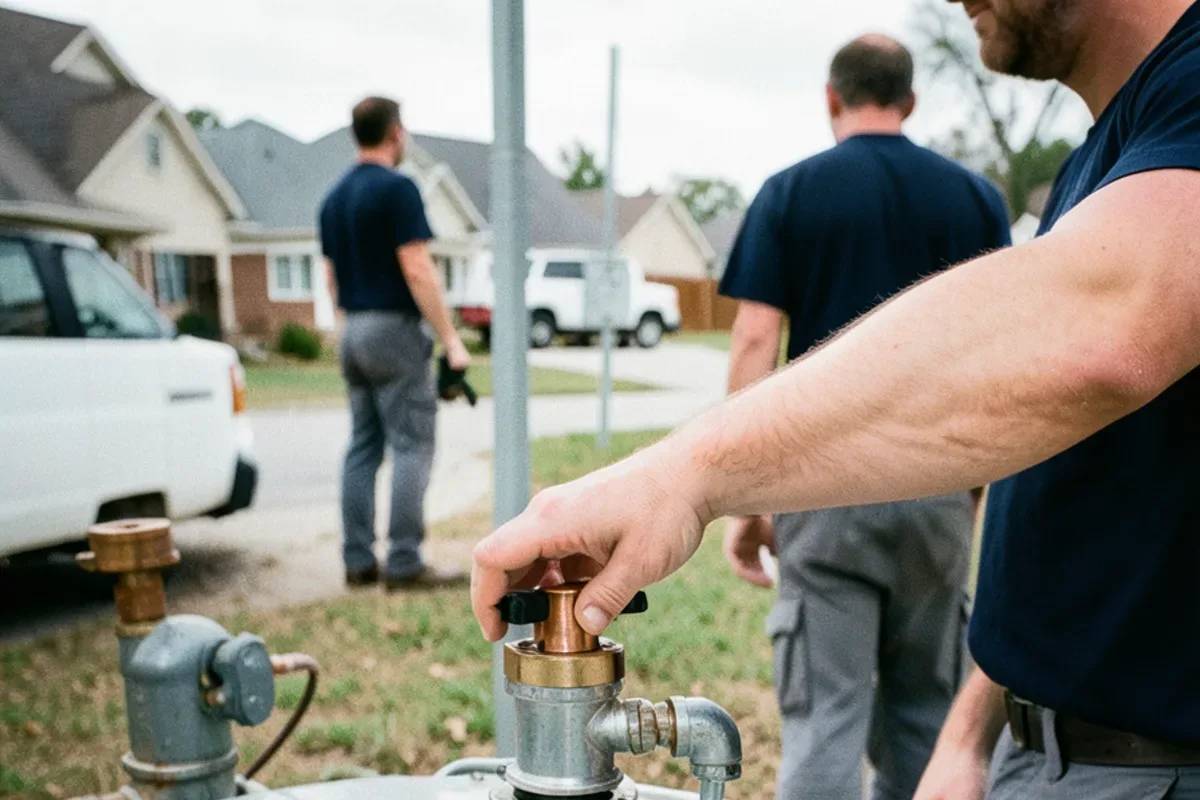
Before you investigate anything, stop the supply. There is a shutoff valve on the cold water line entering the top of the heater; turn it clockwise until it stops. If that valve will not hold, close the home’s main shutoff instead. Then kill the energy source: flip the breaker for an electric heater, or turn the gas control to off for a gas one. Doing this first keeps a slow drip from becoming an emptied tank across the floor while you work out what failed, and it takes a leaking element or a failing tank out of a dangerous state.
Close the cold water shutoff
The valve on the cold line at the top of the heater. If it will not seat, close the home’s main shutoff.
Cut the power or gas
Flip the breaker for an electric unit, or turn a gas unit’s control knob to off.
Find where the water starts
Dry everything, lay down paper towel, and watch which fitting or seam wets first.
Move what the water can reach
Lift stored boxes and anything on the floor nearby before the puddle spreads.
Tell a valve drip from a tank leak
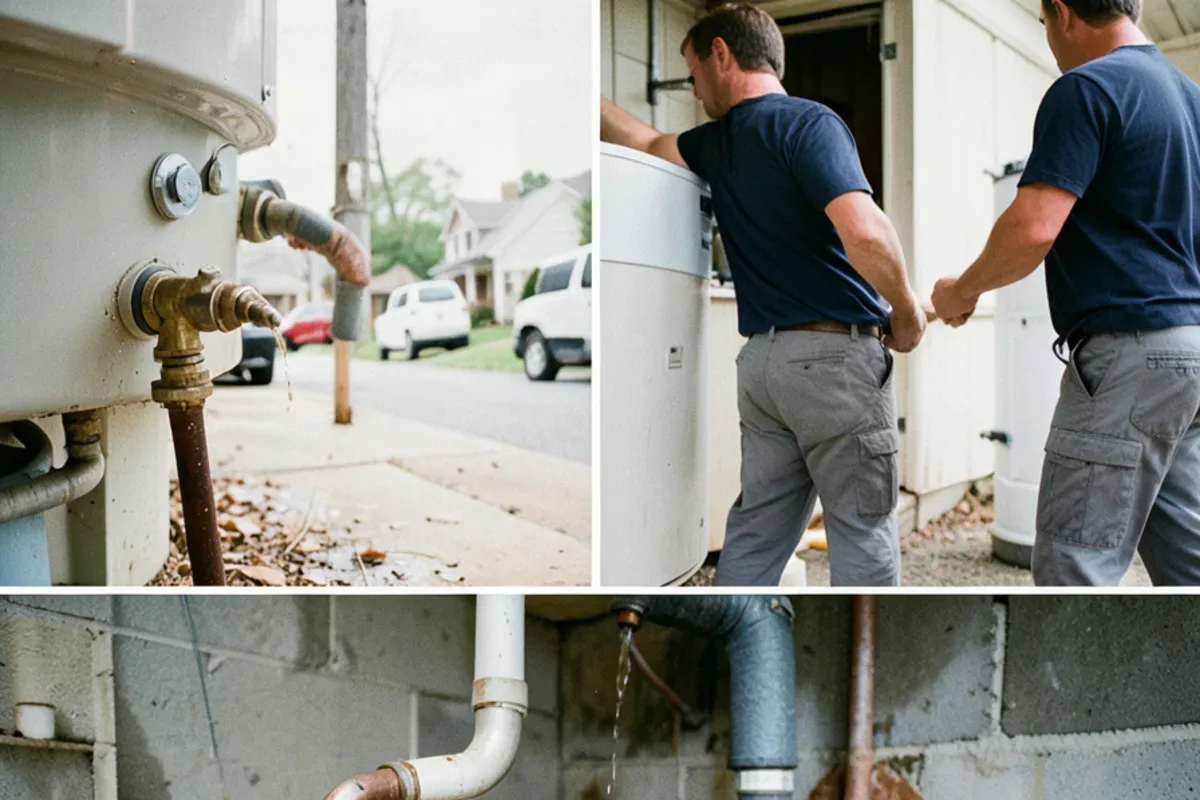
Where the water starts tells you almost everything. A drip from the temperature-and-pressure relief valve on the side, or from the drain valve at the bottom, is usually a valve problem, and those are replaceable without touching the tank. Condensation on a gas heater that is heating a cold fill can look like a leak and clears on its own. But water seeping from a seam in the tank body, or welling up from under the base with no fitting above it, means the steel tank has corroded through. A tank leak does not get better, and there is no sealing it from outside.
Why hard water shortens a heater here
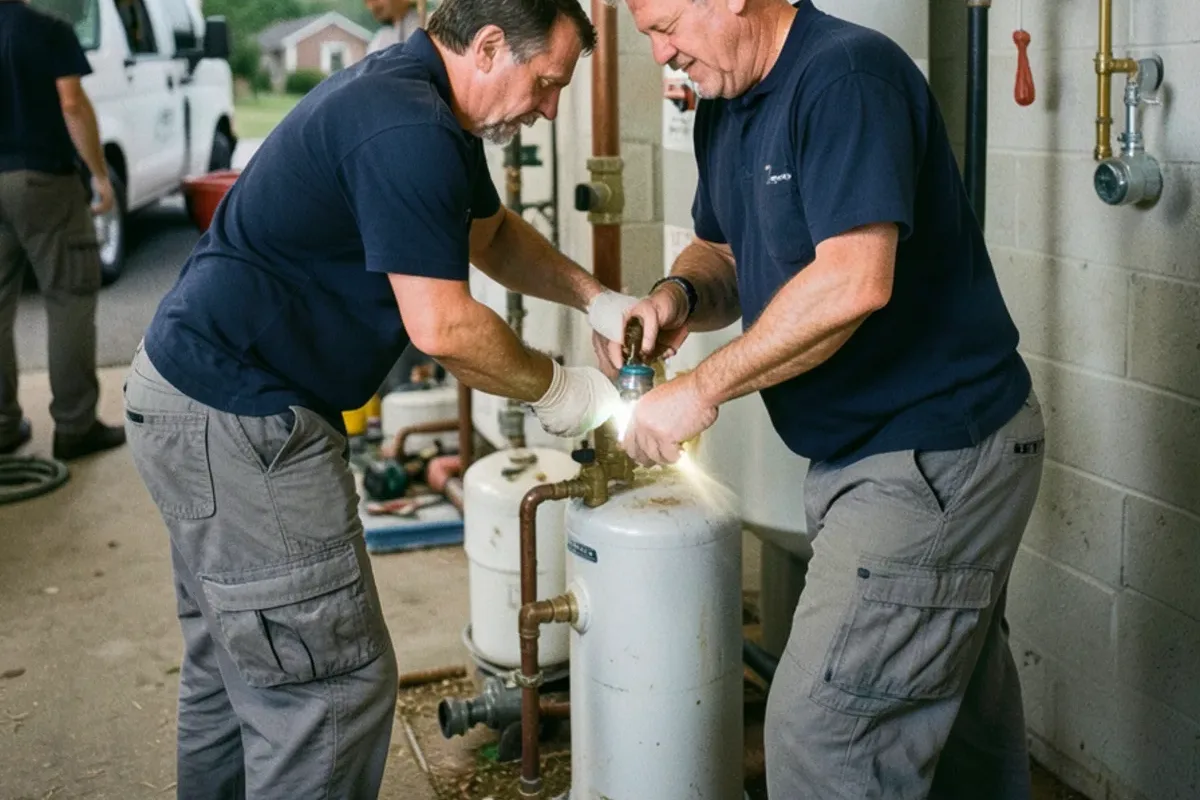
Across Oakland County the water is hard, and the minerals settle as sediment in the bottom of the tank. That sediment insulates the burner from the water, makes the heater rumble and work harder, and speeds the corrosion that finally opens a tank. It is why heaters in this area often reach the end of their run earlier than the sticker suggests. If a tank is leaking from the body and it is past ten years old, replacement is the honest answer, and it is a fair moment to ask whether a softener should go in with it so the next one lasts. Our water heater repair and replacement pages go into the options.
When it is an emergency and when it can wait
A valve drip caught early, with the water shut off, can usually wait for a scheduled visit. A tank pouring water, a leak near electrical, or a gas heater you cannot get the gas to shut on is not something to sit with, and those are worth a call right away. The same goes for any leak you cannot stop at the heater or the main. If you are not sure which you have, shut the water off, keep the area dry, and describe what you are seeing when you call, so the right help comes the first time. Our emergency plumbing page covers what counts as urgent.
Making the next heater last longer
Once a leaking heater is replaced, the hard water that shortened the last one is still there, so the question of how to get more years out of the new tank is worth answering. Flushing the tank once a year clears the sediment that settles out of hard water before it bakes onto the bottom and insulates the burner. Checking the sacrificial anode rod every few years, and replacing it when it is spent, keeps the corrosion aimed at the rod rather than the tank wall. And a softener ahead of the heater slows the whole process by taking the hardness out before it ever reaches the tank. None of this is dramatic, but on Oakland County water it is the difference between a heater that reaches its rated life and one that quits years early. We cover the flush and the anode on a service visit, and talk through whether a softener earns its keep for your home.
Questions people ask about this
Can a leaking water heater be repaired, or does it need replacing?
It depends on where the leak is. A drip from the relief valve or the drain valve is a valve replacement and leaves the tank in service. Water coming from a seam in the tank body or from under the base means the steel has corroded through, and a tank that is leaking there cannot be sealed, so it has to be replaced.
Is a little water around the heater always a leak?
Not always. On a gas heater, a cold tank filling with cold water can sweat and drip condensation that looks like a leak and clears once the water warms. Dry the area, lay down paper towel, and watch where water appears first. If it keeps coming from a fitting or a seam, it is a real leak and worth addressing.
Why do water heaters fail early in Oakland County?
The hard water here drops minerals that collect as sediment in the bottom of the tank, which makes the heater work harder and speeds the corrosion that eventually opens the tank. That is why many heaters in this area reach the end of their life before the warranty age, and why adding a softener often comes up at replacement time.
Want a plumber to look at your situation? We're on Pond Run in Auburn Hills.
(207) 419-2600