
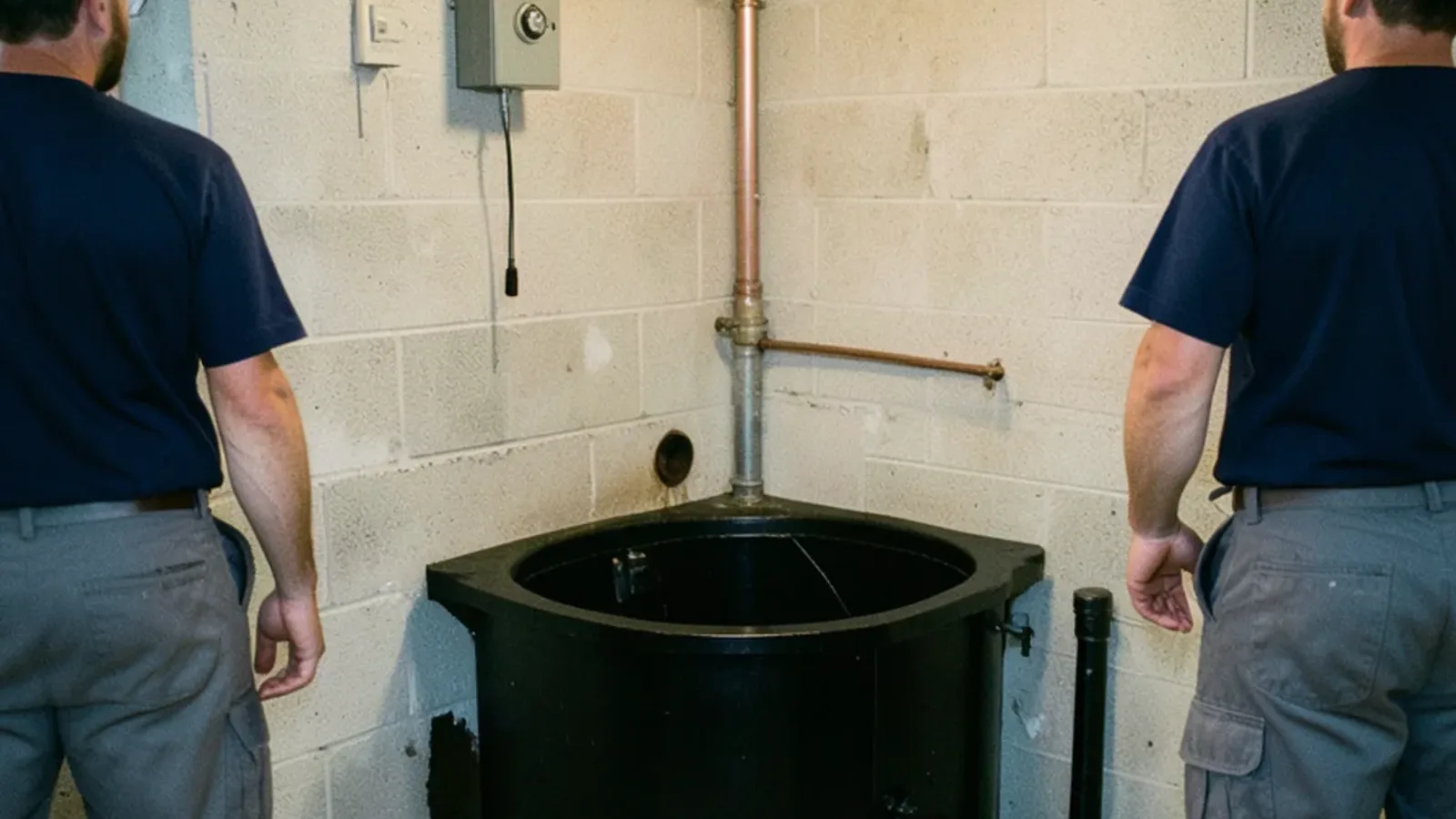
A sewage ejector pump is what makes a basement bathroom or laundry possible when the fixtures sit below the main sewer line. Waste collects in a sealed basin and the pump lifts it up to where gravity can carry it out. When the alarm sounds or the basin stops emptying, the basement is minutes from a backup, so it is not a repair to put off.
These pits are common under the finished basements that Auburn Hills homeowners add. Here is how the system works, what fails, and when to repair versus replace.
What a sewage ejector does and where it lives
When a toilet, shower or laundry sits below the level of the home’s main drain, their waste cannot flow out by gravity. It drains instead into a sealed basin set into the basement floor. A float switch starts the ejector pump when the basin fills, and the pump pushes the waste, solids and all, up through a discharge line to the gravity sewer above, where it joins the rest of the home’s flow. A vent lets the basin breathe, and a check valve keeps what was pumped from draining back in. It is a different machine from a sump pump, which handles clean groundwater, not sewage.
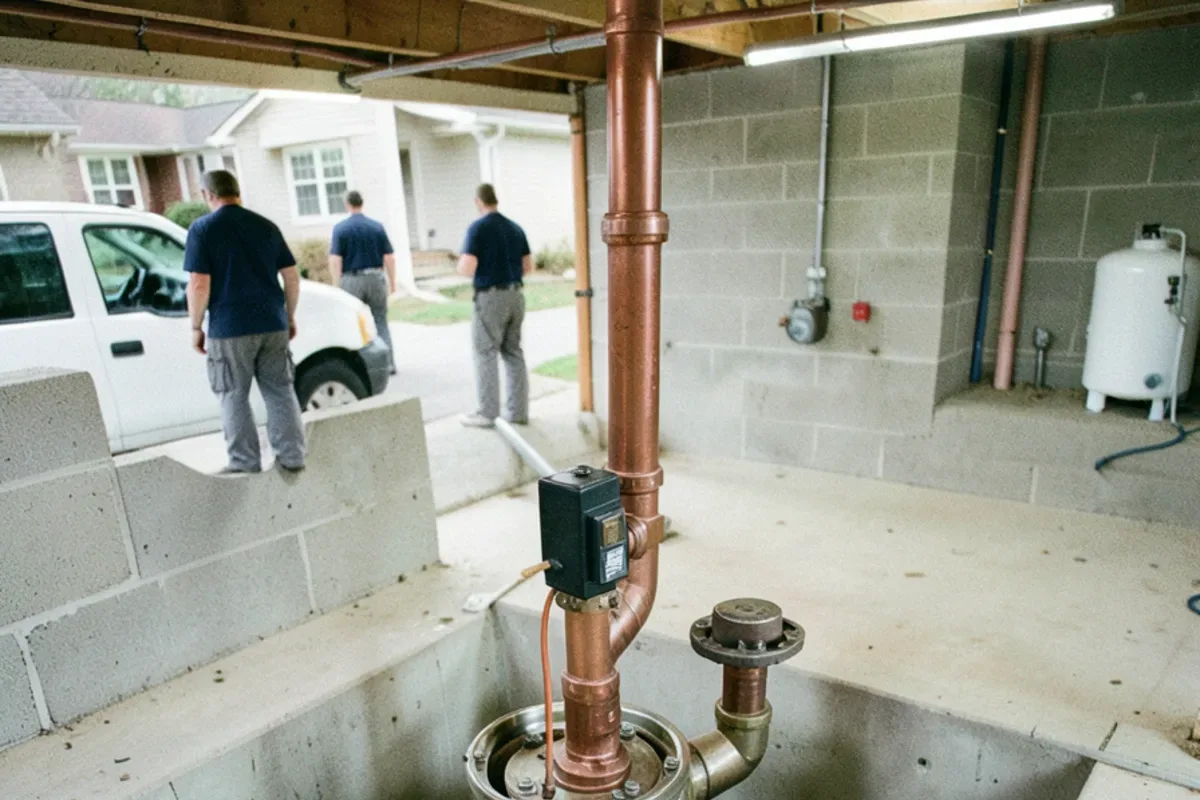
Why a basement bath depends on it in Auburn Hills
Finishing a basement is one of the most common projects in the city’s 1980s and 1990s homes, and a basement bathroom or wet bar almost always needs an ejector because the fixtures sit below the building drain. Builders in that era installed ejector pits as a matter of course, which means a lot of these pumps are now original and well into or past a typical ten-to-fifteen-year life. If you are planning to finish a basement, our bathroom remodel plumbing page covers how the ejector ties into the rest of the rough-in.
What the alarm and a failing pump are telling you
The alarm float sits above the pump’s start float for a reason: it warns you the basin is filling faster than the pump is clearing it, which is the moment to act. The usual causes are a pump that has worn out or seized, a float switch stuck by debris or tangled against the basin wall, a check valve that lets pumped waste fall back so the pump cycles without gaining, or a discharge or vent that has clogged. A pump that runs constantly, one that hums without pumping, and one that is silent each point to different parts, which is where diagnosis starts. Our guide on what an ejector alarm means walks through the first checks.

Repair or replace the ejector
Not every alarm means a new pump. A stuck float, a bad check valve or a clogged vent is a repair, and we fix those rather than sell a replacement you do not need. But when the pump itself has failed, and especially when it is original to a 1990s home and past its service life, replacement is the better value, because the basin has to be opened either way and a worn pump near the end will not last. When we replace one, we reseal the basin lid, fit a new check valve, and confirm the float range and the vent so the new pump is not fighting the same problem that killed the last one.
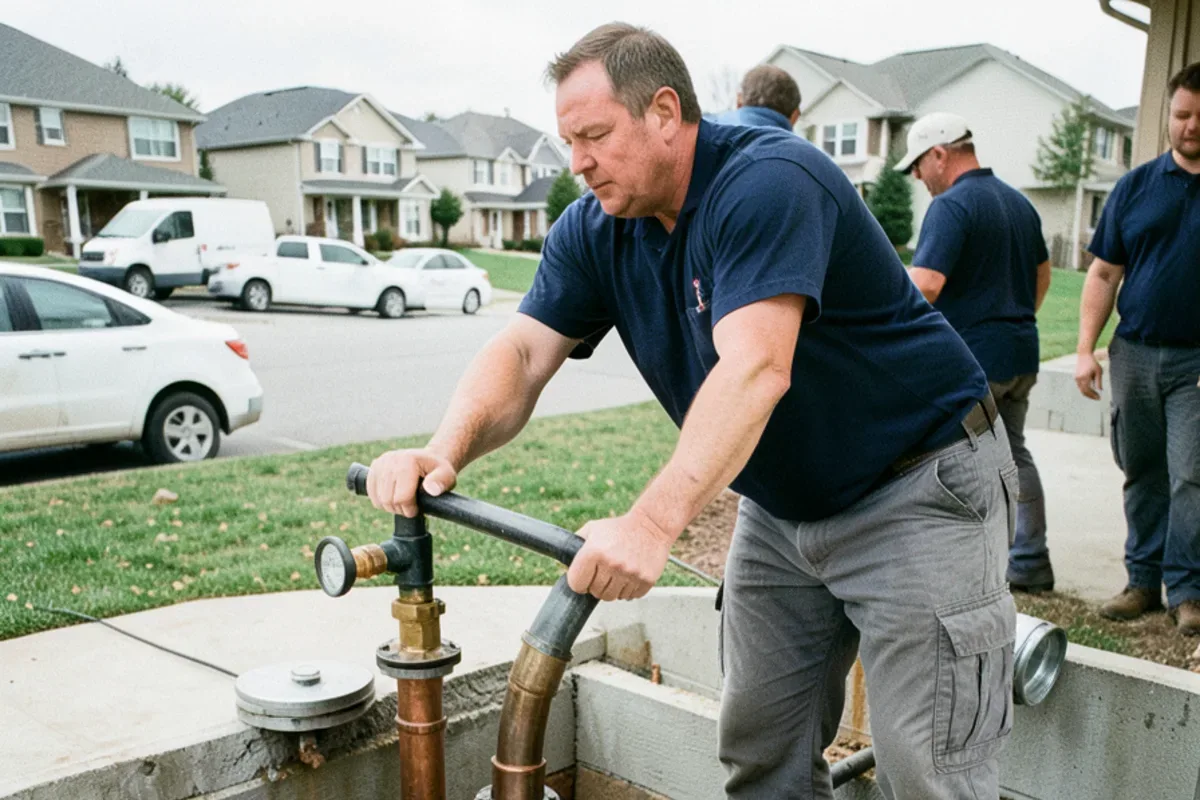
Keeping the basin sealed and vented
An ejector basin is sealed for a reason: it keeps sewer gas out of the basement. A lid that is cracked, loose or not gasketed lets odor into a finished space, and a plugged vent can make the pump struggle and let gas escape. Part of any ejector visit is confirming the lid seals and the vent is clear, because a basement bathroom that smells is usually a basin that is no longer closed up the way it should be. Keeping wipes, grease and anything that is not waste or paper out of those fixtures is the best way to keep the pump healthy between visits.
Sewage ejector pump services around Auburn Hills and nearby cities
- Plumber in Rochester Hills
Finished basements with below-grade baths are common in its 1990s homes, and those original ejectors are now aging out.
- Plumber in Troy
Basement bars and bathrooms are popular here, so ejector pits run constantly and their pumps reach the end of their life.
- Plumber in Bloomfield Township
Large homes with finished lower levels and below-grade suites depend on ejectors that fail quietly until the alarm.
- Plumber in Rochester
Added basement baths in older homes sit well below the gravity sewer, so an ejector is the only way they drain.
- Plumber in Lake Orion
Walkout and lake-area basements with lower-level baths rely on ejectors sized to lift waste up to the main line.
- Plumber in Orion Township
Newer homes with finished basements installed builder-grade ejectors that are now original and well used.
- Plumber in Birmingham
Renovated older homes add below-grade baths that need an ejector tied into the rough-in correctly.
- Plumber in West Bloomfield Township
Finished lower levels with full baths run ejectors hard, and a stuck float or failed check valve is a frequent call.
- Plumber in Oakland County
County-wide, finished-basement baths in homes of this era mean ejector pumps that need repair or replacement as they age.
Sewage ejector pump services questions from Auburn Hills customers
What is the difference between a sewage ejector and a sump pump?
They solve different problems. A sump pump moves clean groundwater out of a pit under the basement floor to keep it dry. A sewage ejector lifts actual waste from a basement toilet, shower or laundry up to the gravity sewer. The ejector basin is sealed and vented because it handles sewage; a sump basin is not. You cannot swap one for the other.
My ejector alarm is sounding. What should I do first?
Stop using the basement fixtures so the basin does not overflow, then check that the pump has power and the breaker has not tripped. Do not open a sealed basin yourself. Call for service, because the alarm means the basin is filling faster than the pump clears it, and a backup into a finished basement is close behind if the pump is failing.
Should I repair or replace a failing ejector pump?
It depends on the cause. A stuck float, a bad check valve or a clogged vent is a repair worth doing. A pump that has worn out or seized, especially one original to a 1990s home and past its ten-to-fifteen-year life, is better replaced, since the basin must be opened either way and a tired pump will not last long.
Why does my basement bathroom smell like sewer gas?
Usually the ejector basin is no longer sealed. A cracked or loose lid, a failed gasket, or a plugged vent lets gas into the room. Part of servicing an ejector is confirming the lid seals and the vent is clear. If the smell appears with the pump running, the check valve or vent is often the reason, and both are straightforward to fix.
Still not sure what you're dealing with? Describe it on the phone and we'll tell you what we'd check first.
(207) 419-2600Last updated October 28, 2026